题目
Problem
(a) Starting from the definitions of cosh and sinh in terms of exponentials, prove that
cosh2x−sinh2x=1.
(3)
(b) Show that dxd(tan−1(sinhx))=sechx.
(3)
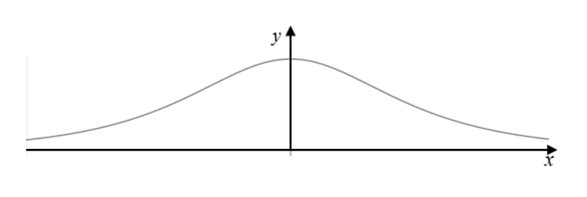
(c) Sketch the graph of y=sechx, stating the equation of the asymptote.
(2)
(d) By considering a suitable set of n rectangles of unit width, use your sketch to show that
r=1∑nsechr<tan−1(sinhn).
(3)
(e) Hence state an upper bound, in terms of π, for r=1∑∞sechr.
(1)
题目中文翻译
(a) 从 cosh 和 sinh 的指数形式定义出发,证明
cosh2x−sinh2x=1.
(3)
(b) 证明 dxd(tan−1(sinhx))=sechx。
(3)
(c) 画出 y=sechx 的图像草图,并写出渐近线的方程。
(2)
(d) 通过考虑一组合适的、宽均为一个单位的 n 个矩形,利用你的草图证明
r=1∑nsechr<tan−1(sinhn).
(3)
(e) 由此写出 r=1∑∞sechr 的一个上界,用含 π 的式子表示。
(1)
原卷通用作答要求
Answer all questions. You should use a calculator where appropriate.
You must show all necessary working clearly; no marks will be given for unsupported answers from a calculator.
Give non-exact numerical answers correct to 3 significant figures, or 1 decimal place for angles in degrees, unless a different level of accuracy is specified in the question.
请回答所有题目。适当时应使用计算器。必须清楚展示所有必要的计算过程;仅给出计算器答案而没有过程,不予评分。除非题目另有精度要求,非精确数值答案保留 3 位有效数字,以度为单位的角度保留 1 位小数。
解答
(a)
解法一
思路
展开
将两个双曲函数写成指数式。用平方差可直接消去大部分项。
答题过程
展开
The definitions are coshx=(ex+e−x)/2 and sinhx=(ex−e−x)/2. Therefore,
cosh2x−sinh2x==41[(ex+e−x)2−(ex−e−x)2]41⋅4exe−x=1.
(b)
解法一
思路
展开
对 arctan(sinhx) 用链式法则。用 (a) 把分母换成 cosh2x。
答题过程
展开
By the chain rule and (a),
dxdarctan(sinhx)==1+sinh2xcoshxcosh2xcoshx=sechx.
(c)
解法一
思路
展开
coshx 是偶函数,在零点最小,向两侧趋于无穷。因此它的倒数在零点最高,向两侧趋于零。
答题过程
展开
The curve is symmetric about the y-axis, lies above the x-axis, and has maximum (0,1). It decreases for x>0 and tends to zero as x→±∞. The horizontal asymptote is y=0.
(d)
解法一
思路
展开
取草图中 x≥0 的下降段。宽为 1 的右端点矩形位于曲线下方,再用 (b) 积分。
答题过程
展开
On each interval [r−1,r], the right-endpoint rectangle of height sechr lies below the curve on the interior. The total rectangle area is sech1+sech2+sech3+⋯+sech(n−1)+sechn. Thus
r=1∑nsechr<===∫0nsechxdx[arctan(sinhx)]0narctan(sinhn)−arctan0arctan(sinhn).
(e)
解法一
思路
展开
当 n→∞,sinhn 趋于无穷,反正切趋于 π/2。各项为正,部分和单调增加。
答题过程
展开
The positive partial sums increase and are bounded above by arctan(sinhn)<π/2. Thus the series converges and π/2 is an upper bound for its sum.
