Skip to content
CalcGospel 國際數學圖譜
返回

FP2 2025 June A Q1

A Level / Edexcel / FP2

IAL 2025 June A Paper · Question 1

题目

Problem

1.

In this question you must show all stages of your working.
Solutions relying on calculator technology are not acceptable.

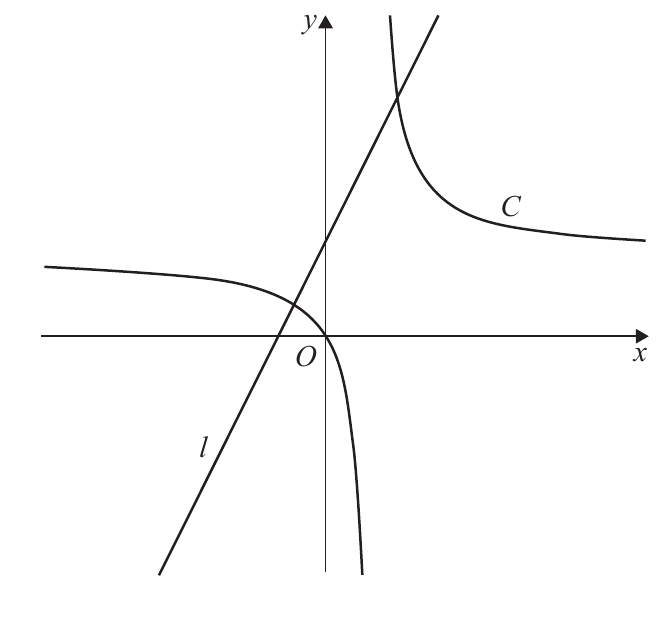
Figure 1 shows a sketch of the curve CC with equation

y=10xx−6x≠6\begin{align*} y=\frac{10x}{x-6}\qquad x\ne 6 \end{align*}

and the line ll with equation y=2x+12y=2x+12

(a) Use algebra to determine the xx coordinates of the points of intersection of CC and ll

(2)

(b) Determine the range of values of xx for which

(i) 2x+12>10xx−62x+12>\dfrac{10x}{x-6}

(ii) ∣2x+12∣>∣10xx−6∣\left|2x+12\right|>\left|\dfrac{10x}{x-6}\right|

(4)
题目中文翻译

本题必须展示所有解题步骤。不接受依赖计算器技术的解答。

图1给出了曲线 CC 与直线 ll 的示意图,其中

C:y= 10xx−6,x≠6,l:y= 2x+12\begin{align*} C:\quad y=&\,\frac{10x}{x-6},\qquad x\ne6,\\[3mm] l:\quad y=&\,2x+12 \end{align*}

(a) 用代数方法求 CC 与 ll 交点的 xx 坐标。

(2)

(b) 求满足以下不等式的 xx 的取值范围:

(i) 2x+12>10xx−62x+12>\dfrac{10x}{x-6};

(ii) ∣2x+12∣>∣10xx−6∣|2x+12|>\Big|\dfrac{10x}{x-6}\Big|。

(4)

解答

(a)

解法一

思路

展开

交点的 xx 坐标来自两条曲线的 yy 值相等。题目强调用代数,所以要把分式方程化成二次方程并因式分解,不能只从图上读。

答题过程

展开

At the points of intersection,

10xx−6= 2x+1210x= (2x+12)(x−6)= 2x2−722x2−10x−72= 0x2−5x−36= 0(x+4)(x−9)= 0\begin{align*} \frac{10x}{x-6} =&\,2x+12\\[4mm] 10x =&\,(2x+12)(x-6)\\[4mm] =&\,2x^2-72\\[4mm] 2x^2-10x-72 =&\,0\\[4mm] x^2-5x-36 =&\,0\\[4mm] (x+4)(x-9) =&\,0 \end{align*}

Therefore

x=−4orx=9\begin{align*} x=-4 \quad \text{or} \quad x=9 \end{align*}

(b)(i)

解法一

思路

展开

把不等式移到一边,通分后用临界点分区间。注意分母 x−6x-6 会改变符号,所以不能直接两边乘以 x−6x-6 后忘记讨论符号。

答题过程

展开

Consider

2x+12−10xx−6> 0(2x+12)(x−6)−10xx−6> 02x2−72−10xx−6> 02(x+4)(x−9)x−6> 0\begin{align*} 2x+12-\frac{10x}{x-6} >&\,0\\[4mm] \frac{(2x+12)(x-6)-10x}{x-6} >&\,0\\[4mm] \frac{2x^2-72-10x}{x-6} >&\,0\\[4mm] \frac{2(x+4)(x-9)}{x-6} >&\,0 \end{align*}

The critical values are

x=−4,x=6,x=9\begin{align*} x=-4,\qquad x=6,\qquad x=9 \end{align*}

The sign of each factor gives the following table:

x(−∞,−4)(−4,6)(6,9)(9,∞)x+4−+++x−9−−−+x−6−−++2(x+4)(x−9)x−6−+−+\begin{align*} \begin{array}{c|cccc} x&(-\infty,-4)&(-4,6)&(6,9)&(9,\infty)\\ x+4&-&+&+&+\\ x-9&-&-&-&+\\ x-6&-&-&+&+\\\hline \dfrac{2(x+4)(x-9)}{x-6}&-&+&-&+ \end{array} \end{align*}

The zeros are excluded because the inequality is strict, and x=6x=6 is outside the domain. Hence

−4<x<6orx>9\begin{align*} -4<x<6 \quad \text{or} \quad x>9 \end{align*}

(b)(ii)

解法一

思路

展开

两个函数都取绝对值,所以交界点来自 2x+12=10xx−62x+12=\dfrac{10x}{x-6} 和 2x+12=−10xx−62x+12=-\dfrac{10x}{x-6}。找出四个临界值后,用数轴分区间判断。

答题过程

展开

The first pair of boundary points comes from part (a):

x=−4,x=9\begin{align*} x=-4,\qquad x=9 \end{align*}

The other pair of boundary points is found by solving

−(2x+12)= 10xx−6(−2x−12)(x−6)= 10x−2x2+72= 10xx2+5x−36= 0\begin{align*} -(2x+12) =&\,\frac{10x}{x-6}\\[4mm] (-2x-12)(x-6) =&\,10x\\[4mm] -2x^2+72 =&\,10x\\[4mm] x^2+5x-36 =&\,0 \end{align*}

So

(x+9)(x−4)= 0x= −9, 4\begin{align*} (x+9)(x-4)=&\,0\\[4mm] x=&\,-9,\ 4 \end{align*}

The four zeros of the difference of the absolute values are −9,−4,4,9-9,-4,4,9, and x=6x=6 is excluded from the domain. Set

F(x)=∣2x+12∣−∣10xx−6∣\begin{align*} F(x)=|2x+12|-\Big|\frac{10x}{x-6}\Big| \end{align*}

Testing one value in each interval gives

x(−∞,−9)(−9,−4)(−4,4)(4,6)(6,9)(9,∞)test value−10−505710F(x)+−+−−+\begin{align*} \begin{array}{c|cccccc} x&(-\infty,-9)&(-9,-4)&(-4,4)&(4,6)&(6,9)&(9,\infty)\\ \text{test value}&-10&-5&0&5&7&10\\\hline F(x)&+&-&+&-&-&+ \end{array} \end{align*}

Therefore

x<−9,−4<x<4,x>9\begin{align*} x<-9,\qquad -4<x<4,\qquad x>9 \end{align*}

解法二

思路

展开

两边都是非负数,可以平方而不改变不等式。再乘以严格为正的 (x−6)2(x-6)^2,便得到四个一次因子的乘积,可以直接判断符号。

答题过程

展开

For x≠6x\ne6, both sides are non-negative, so squaring preserves the inequality:

(2x+12)2> 100x2(x−6)2\begin{align*} (2x+12)^2 >&\,\frac{100x^2}{(x-6)^2} \end{align*}

Since (x−6)2>0(x-6)^2>0, this is equivalent to

4(x+6)2(x−6)2−100x2> 0(x2−36)2−25x2> 0(x2−5x−36)(x2+5x−36)> 0(x+4)(x−9)(x+9)(x−4)> 0\begin{align*} 4(x+6)^2(x-6)^2-100x^2 >&\,0\\[4mm] (x^2-36)^2-25x^2 >&\,0\\[4mm] (x^2-5x-36)(x^2+5x-36) >&\,0\\[4mm] (x+4)(x-9)(x+9)(x-4) >&\,0 \end{align*}

Each root is simple, so the sign alternates across the four roots:

x(−∞,−9)(−9,−4)(−4,4)(4,9)(9,∞)product+−+−+\begin{align*} \begin{array}{c|ccccc} x&(-\infty,-9)&(-9,-4)&(-4,4)&(4,9)&(9,\infty)\\\hline \text{product}&+&-&+&-&+ \end{array} \end{align*}

Thus

x<−9or−4<x<4orx>9\begin{align*} x<-9\quad\text{or}\quad -4<x<4\quad\text{or}\quad x>9 \end{align*}

None of these intervals contains the excluded value x=6x=6.