题目
Problem
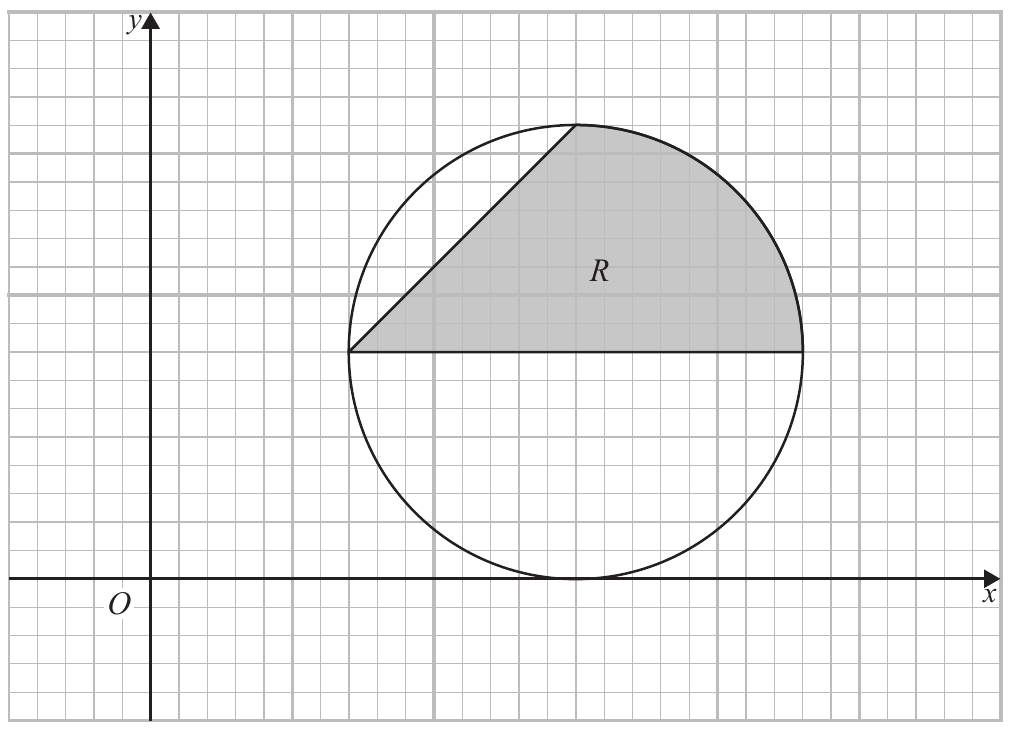
Figure 2 Figure 2 shows an Argand diagram for complex numbers of the form z = x + i y z=x+\mathrm{i}y z = x + i y
Complex numbers that lie in the region R R R
∣ z − 15 − 8 i ∣ ⩽ a \begin{align*}
|z-15-8\mathrm{i}|\leqslant a
\end{align*} ∣ z − 15 − 8 i ∣ ⩽ a 0 ⩽ arg ( z + 1 ) ⩽ b π \begin{align*}
0\leqslant \arg(z+1)\leqslant b\pi
\end{align*} 0 ⩽ arg ( z + 1 ) ⩽ bπ ∣ z + 2 i ∣ ⩾ ∣ z + c i ∣ \begin{align*}
|z+2\mathrm{i}|\geqslant |z+c\mathrm{i}|
\end{align*} ∣ z + 2 i ∣ ⩾ ∣ z + c i ∣ where a a a b b b c c c
(a) Determine the value of a a a b b b c c c
(3)
Given that the complex number w w w R R R
(b) determine the exact range of possible values of ∣ w ∣ |w| ∣ w ∣
(3)
(c) determine the minimum value of arg w \arg w arg w
(2)
解答
(a)
解法一
思路
展开
三个不等式分别对应圆、从 − 1 -1 − 1
#### 答题过程
展开
The inequality
∣ z − 15 − 8 i ∣ ⩽ a \begin{align*}
|z-15-8\mathrm{i}|\leqslant a
\end{align*} ∣ z − 15 − 8 i ∣ ⩽ a represents a circle with centre ( 15 , 8 ) (15,8) ( 15 , 8 ) a a a 8 8 8
a = 8 \begin{align*}
a=8
\end{align*} a = 8 The line bounding the argument region passes through ( − 1 , 0 ) (-1,0) ( − 1 , 0 ) ( 7 , 8 ) (7,8) ( 7 , 8 )
8 − 0 7 − ( − 1 ) = 1 \begin{align*}
\frac{8-0}{7-(-1)}=1
\end{align*} 7 − ( − 1 ) 8 − 0 = 1 Hence the angle is π 4 \frac{\pi}{4} 4 π
b = 1 4 \begin{align*}
b=\frac14
\end{align*} b = 4 1 The inequality
∣ z + 2 i ∣ ⩾ ∣ z + c i ∣ \begin{align*}
|z+2\mathrm{i}|\geqslant |z+c\mathrm{i}|
\end{align*} ∣ z + 2 i ∣ ⩾ ∣ z + c i ∣ compares distances from ( 0 , − 2 ) (0,-2) ( 0 , − 2 ) ( 0 , − c ) (0,-c) ( 0 , − c ) y = 8 y=8 y = 8
− 2 + ( − c ) 2 = 8 − 2 − c = 16 c = − 18 \begin{align*}
\frac{-2+(-c)}{2}
=&\,8\\[4mm]
-2-c
=&\,16\\[4mm]
c
=&\,-18
\end{align*} 2 − 2 + ( − c ) = − 2 − c = c = 8 16 − 18 Therefore
a = 8 , b = 1 4 , c = − 18 \begin{align*}
a=8,\qquad b=\frac14,\qquad c=-18
\end{align*} a = 8 , b = 4 1 , c = − 18
(b)
解法一
思路
展开
∣ w ∣ |w| ∣ w ∣ ( 7 , 8 ) (7,8) ( 7 , 8 ) 17 17 17 8 8 8
答题过程
展开
The minimum value of ∣ w ∣ |w| ∣ w ∣ ( 7 , 8 ) (7,8) ( 7 , 8 )
∣ w ∣ min = 7 2 + 8 2 = 113 \begin{align*}
|w|_{\min}
=&\,\sqrt{7^2+8^2}\\[4mm]
=&\,\sqrt{113}
\end{align*} ∣ w ∣ m i n = = 7 2 + 8 2 113 The centre of the circle is ( 15 , 8 ) (15,8) ( 15 , 8 )
15 2 + 8 2 = 17 \begin{align*}
\sqrt{15^2+8^2}
=&\,17
\end{align*} 1 5 2 + 8 2 = 17 The largest possible distance from the origin to a point on this circular boundary is
17 + 8 = 25 \begin{align*}
17+8=25
\end{align*} 17 + 8 = 25 Therefore the exact range is
113 ⩽ ∣ w ∣ ⩽ 25 \begin{align*}
\sqrt{113}\leqslant |w|\leqslant 25
\end{align*} 113 ⩽ ∣ w ∣ ⩽ 25
(c)
解法一
思路
展开
要让 arg w \arg w arg w y / x y/x y / x y = 8 y=8 y = 8 ( 23 , 8 ) (23,8) ( 23 , 8 )
答题过程
展开
The minimum argument occurs at the point ( 23 , 8 ) (23,8) ( 23 , 8 )
arg w min = arctan ( 8 23 ) = 0.335 radians \begin{align*}
\arg w_{\min}
=&\,\arctan\left(\frac{8}{23}\right)\\[4mm]
=&\,0.335\ \text{radians}
\end{align*} arg w m i n = = arctan ( 23 8 ) 0.335 radians to 3 significant figures.