Skip to content
CalcGospel 國際數學圖譜
返回

FP3 2023 June Q3

A Level / Edexcel / FP3

IAL 2023 June Paper · Question 3

题目

Problem

3.

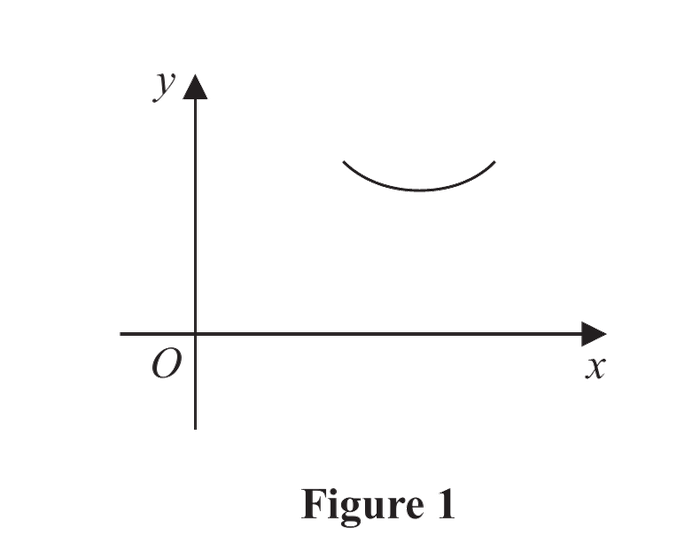
Figure 1 shows a sketch of the curve CC with equation

y=12(tan⁡x+cot⁡x)π6≤x≤π3y=\frac12(\tan x+\cot x) \qquad \frac{\pi}{6}\le x\le \frac{\pi}{3}

(a) Show that the length of CC is given by

12∫π/6π/3(tan⁡2x+cot⁡2x) dx\frac12\int_{\pi/6}^{\pi/3}\bigl(\tan^2x+\cot^2x\bigr)\,\mathrm{d}x
(6)

(b) Hence determine the exact length of CC, giving your answer in simplest form.

(5)
题目中文翻译

3.

图 1 展示了曲线 CC 的示意图,其方程为

y=12(tan⁡x+cot⁡x)π6≤x≤π3y=\frac12(\tan x+\cot x) \qquad \frac{\pi}{6}\le x\le \frac{\pi}{3}

(a) 证明曲线 CC 的长度可表示为

12∫π/6π/3(tan⁡2x+cot⁡2x) dx\frac12\int_{\pi/6}^{\pi/3}\bigl(\tan^2x+\cot^2x\bigr)\,\mathrm{d}x
(6)

(b) 因此求曲线 CC 的精确长度,答案化为最简形式。

(5)

解答

(a)

解法一:先使用恒等式再平方

思路

展开

先求导,并立即用 sec⁡2x=1+tan⁡2x\sec^2x=1+\tan^2x 与 cosec⁡2x=1+cot⁡2x\operatorname{cosec}^2x=1+\cot^2x 化简。平方后利用 tan⁡xcot⁡x=1\tan x\cot x=1,可把弧长公式中的根式整理成题目指定的被积函数;最后还要说明开方时取正值。

答题过程

展开

Differentiating,

dydx= 12(sec⁡2x−cosec⁡2x)= 12(1+tan⁡2x−1−cot⁡2x)= 12(tan⁡2x−cot⁡2x).\begin{align*} \frac{\mathrm{d}y}{\mathrm{d}x} =&\,\frac12 \bigl(\sec^2x-\operatorname{cosec}^2x\bigr) \\ =&\,\frac12 \bigl(1+\tan^2x-1-\cot^2x\bigr) \\ =&\,\frac12\bigl(\tan^2x-\cot^2x\bigr). \end{align*}

Since tan⁡xcot⁡x=1\tan x\cot x=1,

1+(dydx)2= 1+14(tan⁡2x−cot⁡2x)2= 1+14(tan⁡4x+cot⁡4x−2)= 14(tan⁡4x+cot⁡4x+2)= 14(tan⁡2x+cot⁡2x)2.\begin{align*} 1+\biggl(\frac{\mathrm{d}y}{\mathrm{d}x}\biggr)^2 =&\,1+\frac14 \bigl(\tan^2x-\cot^2x\bigr)^2 \\ =&\,1+\frac14 \bigl(\tan^4x+\cot^4x-2\bigr) \\ =&\,\frac14 \bigl(\tan^4x+\cot^4x+2\bigr) \\ =&\,\frac14 \bigl(\tan^2x+\cot^2x\bigr)^2. \end{align*}

On the given interval, tan⁡2x+cot⁡2x>0\tan^2x+\cot^2x>0. Therefore,

1+(dydx)2=12(tan⁡2x+cot⁡2x).\sqrt{1+\biggl(\frac{\mathrm{d}y}{\mathrm{d}x}\biggr)^2} =\frac12\bigl(\tan^2x+\cot^2x\bigr).

Using the arc length formula,

s= ∫π/6π/31+(dydx)2 dx= 12∫π/6π/3(tan⁡2x+cot⁡2x) dx,\begin{align*} s =&\,\int_{\pi/6}^{\pi/3} \sqrt{1+\biggl(\frac{\mathrm{d}y}{\mathrm{d}x}\biggr)^2} \,\mathrm{d}x \\ =&\,\frac12\int_{\pi/6}^{\pi/3} \bigl(\tan^2x+\cot^2x\bigr)\,\mathrm{d}x, \end{align*}

as required.

解法二:先平方再使用恒等式

思路

展开

先保留导数中的 sec⁡2x\sec^2x 与 cosec⁡2x\operatorname{cosec}^2x 并整体平方,然后才代入平方恒等式。完整展开后,常数项和二次项抵消,同样得到关于 tan⁡4x\tan^4x 与 cot⁡4x\cot^4x 的表达式。

答题过程

展开

We have

dydx=12(sec⁡2x−cosec⁡2x).\frac{\mathrm{d}y}{\mathrm{d}x} =\frac12 \bigl(\sec^2x-\operatorname{cosec}^2x\bigr).

Squaring first,

(dydx)2= 14(sec⁡4x+cosec⁡4x −2sec⁡2xcosec⁡2x).\begin{align*} \biggl(\frac{\mathrm{d}y}{\mathrm{d}x}\biggr)^2 =&\,\frac14\bigl( \sec^4x+\operatorname{cosec}^4x \\ &\,\hspace{2pt} -2\sec^2x\operatorname{cosec}^2x \bigr). \end{align*}

Now use

sec⁡2x=1+tan⁡2x,cosec⁡2x=1+cot⁡2x.\sec^2x=1+\tan^2x, \qquad \operatorname{cosec}^2x=1+\cot^2x.

Then

4(dydx)2= (1+tan⁡2x)2+(1+cot⁡2x)2 −2(1+tan⁡2x)(1+cot⁡2x)= 1+2tan⁡2x+tan⁡4x +1+2cot⁡2x+cot⁡4x −2−2tan⁡2x−2cot⁡2x −2tan⁡2xcot⁡2x= tan⁡4x+cot⁡4x −2tan⁡2xcot⁡2x= tan⁡4x+cot⁡4x−2.\begin{align*} 4\biggl(\frac{\mathrm{d}y}{\mathrm{d}x}\biggr)^2 =&\,(1+\tan^2x)^2+(1+\cot^2x)^2 \\ &\,-2(1+\tan^2x)(1+\cot^2x) \\ =&\,1+2\tan^2x+\tan^4x \\ &\,+1+2\cot^2x+\cot^4x \\ &\,-2-2\tan^2x-2\cot^2x \\ &\,-2\tan^2x\cot^2x \\ =&\,\tan^4x+\cot^4x \\ &\,-2\tan^2x\cot^2x \\ =&\,\tan^4x+\cot^4x-2. \end{align*}

Hence

1+(dydx)2= 14(tan⁡4x+cot⁡4x+2)= 14(tan⁡2x+cot⁡2x)2.\begin{align*} 1+\biggl(\frac{\mathrm{d}y}{\mathrm{d}x}\biggr)^2 =&\,\frac14 \bigl(\tan^4x+\cot^4x+2\bigr) \\ =&\,\frac14 \bigl(\tan^2x+\cot^2x\bigr)^2. \end{align*}

Since tan⁡2x+cot⁡2x>0\tan^2x+\cot^2x>0 on the interval,

1+(dydx)2=12(tan⁡2x+cot⁡2x).\sqrt{1+\biggl(\frac{\mathrm{d}y}{\mathrm{d}x}\biggr)^2} =\frac12\bigl(\tan^2x+\cot^2x\bigr).

Therefore,

s=12∫π/6π/3(tan⁡2x+cot⁡2x) dx.\boxed{ s=\frac12\int_{\pi/6}^{\pi/3} \bigl(\tan^2x+\cot^2x\bigr)\,\mathrm{d}x }.

(b)

解法一

思路

展开

必须承接 (a) 的弧长积分。分别把 tan⁡2x\tan^2x 和 cot⁡2x\cot^2x 改写成 sec⁡2x−1\sec^2x-1 与 cosec⁡2x−1\operatorname{cosec}^2x-1,即可逐项积分;再准确代入两个特殊角并化简。

答题过程

展开

Using the result from part (a),

s= 12∫π/6π/3(tan⁡2x+cot⁡2x) dx= 12∫π/6π/3(sec⁡2x+cosec⁡2x−2) dx= 12[tan⁡x−cot⁡x−2x]π/6π/3.\begin{align*} s =&\,\frac12\int_{\pi/6}^{\pi/3} \bigl(\tan^2x+\cot^2x\bigr)\,\mathrm{d}x \\ =&\,\frac12\int_{\pi/6}^{\pi/3} \bigl(\sec^2x+\operatorname{cosec}^2x-2\bigr) \,\mathrm{d}x \\ =&\,\frac12 \bigl[\tan x-\cot x-2x\bigr]_{\pi/6}^{\pi/3}. \end{align*}

At the upper limit,

tan⁡π3−cot⁡π3−2π3= 3−13−2π3= 233−2π3.\begin{align*} \tan\frac{\pi}{3} -\cot\frac{\pi}{3} -\frac{2\pi}{3} =&\,\sqrt3-\frac1{\sqrt3}-\frac{2\pi}{3} \\ =&\,\frac{2\sqrt3}{3}-\frac{2\pi}{3}. \end{align*}

At the lower limit,

tan⁡π6−cot⁡π6−π3= 13−3−π3= −233−π3.\begin{align*} \tan\frac{\pi}{6} -\cot\frac{\pi}{6} -\frac{\pi}{3} =&\,\frac1{\sqrt3}-\sqrt3-\frac{\pi}{3} \\ =&\,-\frac{2\sqrt3}{3}-\frac{\pi}{3}. \end{align*}

Therefore,

s= 12(233−2π3 +233+π3)= 233−π6= 43−π6.\begin{align*} s =&\,\frac12\biggl( \frac{2\sqrt3}{3}-\frac{2\pi}{3} \\ &\,\hspace{2pt} +\frac{2\sqrt3}{3}+\frac{\pi}{3} \biggr) \\ =&\,\frac{2\sqrt3}{3}-\frac{\pi}{6} \\ =&\,\boxed{\frac{4\sqrt3-\pi}{6}}. \end{align*}