Skip to content
CalcGospel 國際數學圖譜
返回

FP3 2025 June Q7

A Level / Edexcel / FP3

IAL 2025 June Paper · Question 7

题目

Problem

7.

In this question you must show all stages of your working.

Solutions relying entirely on calculator technology are not acceptable.
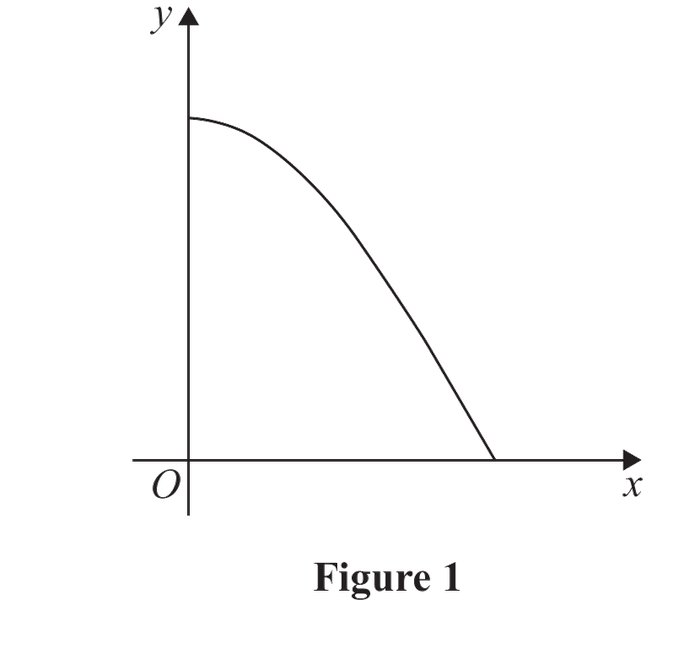
Figure 1 shows a sketch of the curve with equation

y= cos⁡2x0≤x≤π4\begin{align*} y =&\, \cos 2x \qquad 0 \le x \le \frac{\pi}{4} \end{align*}

The curve is rotated through 2π2\pi radians about the x-axis.

(a) Show that the area of the curved surface generated is given by

S= 2π∫0π/4cos⁡2x1+4sin⁡22x dx\begin{align*} S =&\, 2\pi \int_0^{\pi/4} \cos 2x \sqrt{1 + 4\sin^2 2x}\,\mathrm{d}x \end{align*}
(2)

(b) Hence, using the substitution 2sin⁡2x=sinh⁡θ2\sin 2x = \sinh \theta, show that

S= π4(ln⁡(a+b)+ab)\begin{align*} S =&\, \frac{\pi}{4}\Big(\ln(a+\sqrt{b}) + a\sqrt{b}\Big) \end{align*}

where aa and bb are integers to be determined.

(7)
题目中文翻译

在本题中,你必须写出所有解题步骤。

不能完全依赖计算器技术求解。

图 1 展示了曲线的草图,其方程为

y= cos⁡2x0≤x≤π4\begin{align*} y =&\, \cos 2x \qquad 0 \le x \le \frac{\pi}{4} \end{align*}

该曲线绕 x 轴旋转 2π2\pi 弧度。

(a) 证明所生成曲面的面积可表示为

S= 2π∫0π/4cos⁡2x1+4sin⁡22x dx\begin{align*} S =&\, 2\pi \int_0^{\pi/4} \cos 2x \sqrt{1 + 4\sin^2 2x}\,\mathrm{d}x \end{align*}
(2)

(b) 由此,使用代换 2sin⁡2x=sinh⁡θ2\sin 2x = \sinh\theta,证明

S= π4(ln⁡(a+b)+ab)\begin{align*} S =&\, \frac{\pi}{4}\Big(\ln(a+\sqrt{b}) + a\sqrt{b}\Big) \end{align*}

其中 aa 和 bb 为待定整数。

(7)

解答

(a)

解法一

思路

展开

曲线绕 xx 轴旋转的曲面面积公式为 2π∫y1+(dy/dx)2 dx2\pi\int y\sqrt{1+(\mathrm{d}y/\mathrm{d}x)^2}\,\mathrm{d}x。先求导,再把 yy、导数及原题给出的上下限完整代入。

答题过程

展开

For

y=cos⁡2x,y=\cos2x,

we have

dydx=−2sin⁡2x.\frac{\mathrm{d}y}{\mathrm{d}x}=-2\sin2x.

The area of the curved surface generated by rotation about the xx-axis is

S=2π∫0π/4y1+(dydx)2 dx.S=2\pi\int_0^{\pi/4} y\sqrt{1+\bigg(\frac{\mathrm{d}y}{\mathrm{d}x}\bigg)^2} \,\mathrm{d}x.

Substituting y=cos⁡2xy=\cos2x and the derivative,

S= 2π∫0π/4cos⁡2x1+(−2sin⁡2x)2 dx= 2π∫0π/4cos⁡2x1+4sin⁡22x dx,\begin{align*} S =&\,2\pi\int_0^{\pi/4} \cos2x\sqrt{1+(-2\sin2x)^2}\,\mathrm{d}x\\ =&\,2\pi\int_0^{\pi/4} \cos2x\sqrt{1+4\sin^22x}\,\mathrm{d}x, \end{align*}

as required.

(b)

解法一

思路

展开

按题目指定令 2sin⁡2x=sinh⁡θ2\sin2x=\sinh\theta。求导后,cos⁡2x dx\cos2x\,\mathrm{d}x 会变成 14cosh⁡θ dθ\frac14\cosh\theta\,\mathrm{d}\theta,而根式也等于 cosh⁡θ\cosh\theta,所以积分化为 cosh⁡2θ\cosh^2\theta。最后必须转换上下限,并把 arsinh⁡2\operatorname{arsinh}2 写成自然对数。

答题过程

展开

Let

2sin⁡2x=sinh⁡θ.2\sin2x=\sinh\theta.

Differentiating,

4cos⁡2x dx=cosh⁡θ dθ,4\cos2x\,\mathrm{d}x =\cosh\theta\,\mathrm{d}\theta,

so

cos⁡2x dx=14cosh⁡θ dθ.\cos2x\,\mathrm{d}x =\frac14\cosh\theta\,\mathrm{d}\theta.

Also,

1+4sin⁡22x= 1+sinh⁡2θ= cosh⁡θ.\begin{align*} \sqrt{1+4\sin^22x} =&\,\sqrt{1+\sinh^2\theta}\\ =&\,\cosh\theta. \end{align*}

The limits transform as follows:

xθ00π4arsinh⁡2\begin{array}{c|c} x&\theta\\ \hline 0&0\\ \dfrac{\pi}{4}&\operatorname{arsinh}2 \end{array}

Therefore, using part (a),

S= 2π∫0arsinh⁡214cosh⁡2θ dθ= π2∫0arsinh⁡2cosh⁡2θ dθ.\begin{align*} S =&\,2\pi\int_0^{\operatorname{arsinh}2} \frac14\cosh^2\theta\,\mathrm{d}\theta\\ =&\,\frac{\pi}{2} \int_0^{\operatorname{arsinh}2} \cosh^2\theta\,\mathrm{d}\theta. \end{align*}

Using

cosh⁡2θ=12(1+cosh⁡2θ),\cosh^2\theta =\frac12(1+\cosh2\theta),

we obtain

S= π4[θ+12sinh⁡2θ]0arsinh⁡2.\begin{align*} S =&\,\frac{\pi}{4} \bigg[\theta+\frac12\sinh2\theta\bigg] _0^{\operatorname{arsinh}2}. \end{align*}

Let α=arsinh⁡2\alpha=\operatorname{arsinh}2. Then

sinh⁡α=2\sinh\alpha=2

and

cosh⁡α=1+sinh⁡2α=5.\cosh\alpha=\sqrt{1+\sinh^2\alpha}=\sqrt5.

Hence

12sinh⁡2α=sinh⁡αcosh⁡α=25.\frac12\sinh2\alpha =\sinh\alpha\cosh\alpha =2\sqrt5.

Also,

α=arsinh⁡2=ln⁡(2+5).\alpha=\operatorname{arsinh}2 =\ln(2+\sqrt5).

It follows that

S=π4(ln⁡(2+5)+25).\boxed{ S=\frac{\pi}{4} \big(\ln(2+\sqrt5)+2\sqrt5\big)}.

Therefore,

a=2,b=5.\boxed{a=2,\qquad b=5}.