题目
Problem
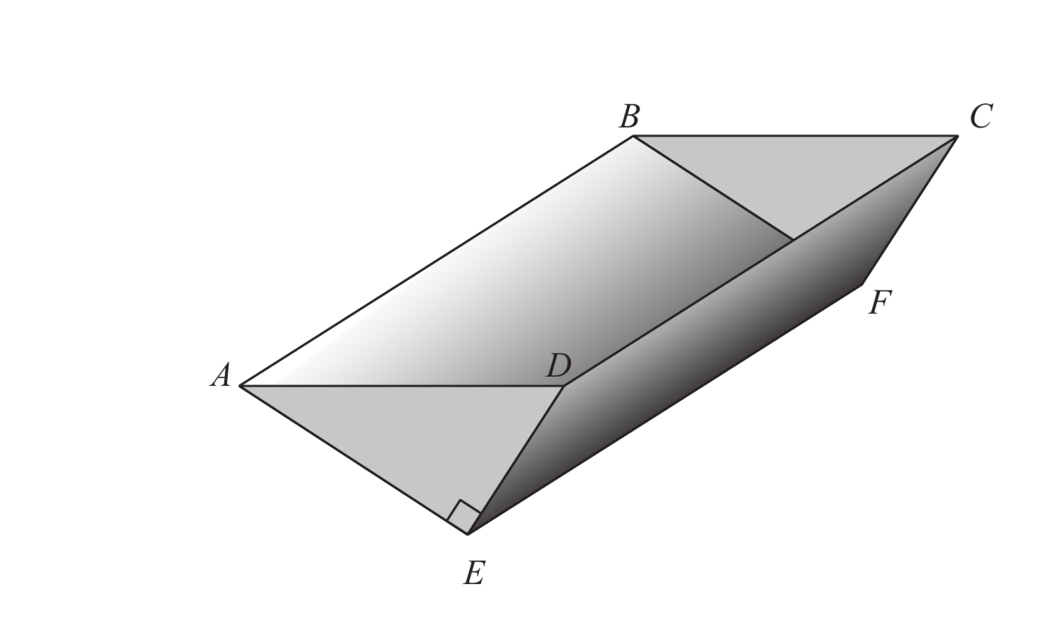
Figure 2 Figure 2 shows a sketch of an open container.
The sides C D E F CDEF C D E F A B F E ABFE A B F E A D E ADE A D E B C F BCF B C F
Given that
A E = B F = 3 x AE=BF=3x A E = B F = 3 x D E = C F = 2 x DE=CF=2x D E = C F = 2 x A B = D C = E F = L AB=DC=EF=L A B = D C = E F = L
and the capacity of the container is 12 m 3 12\text{ m}^3 12 m 3
(a) show that the area of metal used to make the container, S m 2 S\text{ m}^2 S m 2
S = P x 2 + Q x S=Px^2+\frac{Q}{x} S = P x 2 + x Q where P P P Q Q Q
(4)
Given that x x x
(b) use algebraic calculus to find the minimum value of S S S
(5)
(c) Justify that the value of S S S
(2)
解答
(a)
解法一
思路
展开
横截面是直角三角形,面积为 1 2 ( 3 x ) ( 2 x ) = 3 x 2 \frac12(3x)(2x)=3x^2 2 1 ( 3 x ) ( 2 x ) = 3 x 2 L L L L L L
答题过程
展开
The cross-section is a right-angled triangle with perpendicular sides 3 x 3x 3 x 2 x 2x 2 x
So its area is
1 2 ( 3 x ) ( 2 x ) = 3 x 2 . \begin{align*}
\frac12(3x)(2x)=3x^2.
\end{align*} 2 1 ( 3 x ) ( 2 x ) = 3 x 2 . The volume is 12 12 12
3 x 2 L = 12 L = 4 x 2 . \begin{align*}
3x^2L=&\,12\\
L=&\,\frac{4}{x^2}.
\end{align*} 3 x 2 L = L = 12 x 2 4 . The metal consists of two congruent triangular ends and two rectangular sides.
The two triangular ends have total area
2 ( 3 x 2 ) = 6 x 2 . \begin{align*}
2(3x^2)=6x^2.
\end{align*} 2 ( 3 x 2 ) = 6 x 2 . The two rectangular sides have total area
3 x L + 2 x L = 5 x L . \begin{align*}
3xL+2xL=5xL.
\end{align*} 3 xL + 2 xL = 5 xL . Therefore,
S = 6 x 2 + 5 x L = 6 x 2 + 5 x ( 4 x 2 ) = 6 x 2 + 20 x . \begin{align*}
S=&\,6x^2+5xL\\
=&\,6x^2+5x\left(\frac{4}{x^2}\right)\\
=&\,6x^2+\frac{20}{x}.
\end{align*} S = = = 6 x 2 + 5 xL 6 x 2 + 5 x ( x 2 4 ) 6 x 2 + x 20 . So
P = 6 , Q = 20. \begin{align*}
P=6,\qquad Q=20.
\end{align*} P = 6 , Q = 20.
(b)
解法一
思路
展开
要最小化 S = 6 x 2 + 20 x S=6x^2+\frac{20}{x} S = 6 x 2 + x 20 0 0 0 S S S
答题过程
展开
From part (a),
S = 6 x 2 + 20 x . \begin{align*}
S=6x^2+\frac{20}{x}.
\end{align*} S = 6 x 2 + x 20 . Differentiate:
d S d x = 12 x − 20 x 2 . \begin{align*}
\frac{dS}{dx}=12x-\frac{20}{x^2}.
\end{align*} d x d S = 12 x − x 2 20 . At a stationary point,
12 x − 20 x 2 = 0 12 x 3 = 20 x 3 = 5 3 x = 5 3 3 . \begin{align*}
12x-\frac{20}{x^2}=&\,0\\
12x^3=&\,20\\
x^3=&\,\frac53\\
x=&\,\sqrt[3]{\frac53}.
\end{align*} 12 x − x 2 20 = 12 x 3 = x 3 = x = 0 20 3 5 3 3 5 . Now substitute into S S S
S min = 6 ( 5 3 3 ) 2 + 20 5 3 3 = 25.315 … . \begin{align*}
S_{\min}
=&\,6\left(\sqrt[3]{\frac53}\right)^2
+\frac{20}{\sqrt[3]{\frac53}}\\
=&\,25.315\ldots.
\end{align*} S m i n = = 6 ( 3 3 5 ) 2 + 3 3 5 20 25.315 … . Therefore, the minimum value of S S S
25.3 m 2 \begin{align*}
25.3\text{ m}^2
\end{align*} 25.3 m 2 to one decimal place.
(c)
解法一
思路
展开
用 second derivative test。若在 stationary point 处 d 2 S d x 2 > 0 \frac{d^2S}{dx^2}>0 d x 2 d 2 S > 0
答题过程
展开
Since
d S d x = 12 x − 20 x 2 , \begin{align*}
\frac{dS}{dx}=12x-\frac{20}{x^2},
\end{align*} d x d S = 12 x − x 2 20 , we have
d 2 S d x 2 = 12 + 40 x 3 . \begin{align*}
\frac{d^2S}{dx^2}=12+\frac{40}{x^3}.
\end{align*} d x 2 d 2 S = 12 + x 3 40 . At
x = 5 3 3 , \begin{align*}
x=\sqrt[3]{\frac53},
\end{align*} x = 3 3 5 , we have x > 0 x>0 x > 0
12 + 40 x 3 > 0. \begin{align*}
12+\frac{40}{x^3}>0.
\end{align*} 12 + x 3 40 > 0. Therefore, the stationary value is a minimum.
解法二
思路
展开
也可以看导数符号变化:在 stationary point 左边导数为负,右边导数为正,说明函数先下降后上升。
答题过程
展开
The stationary point is at
x = 5 3 3 = 1.1856 … . \begin{align*}
x=\sqrt[3]{\frac53}=1.1856\ldots.
\end{align*} x = 3 3 5 = 1.1856 … . Use
d S d x = 12 x − 20 x 2 . \begin{align*}
\frac{dS}{dx}=12x-\frac{20}{x^2}.
\end{align*} d x d S = 12 x − x 2 20 . For example,
d S d x ∣ x = 1 = 12 − 20 = − 8 < 0 , \begin{align*}
\left.\frac{dS}{dx}\right|_{x=1}
=&\,12-20\\
=&\,-8<0,
\end{align*} d x d S x = 1 = = 12 − 20 − 8 < 0 , and
d S d x ∣ x = 2 = 24 − 20 4 = 19 > 0. \begin{align*}
\left.\frac{dS}{dx}\right|_{x=2}
=&\,24-\frac{20}{4}\\
=&\,19>0.
\end{align*} d x d S x = 2 = = 24 − 4 20 19 > 0. So S S S
Therefore, the stationary value is a minimum.