题目
Problem
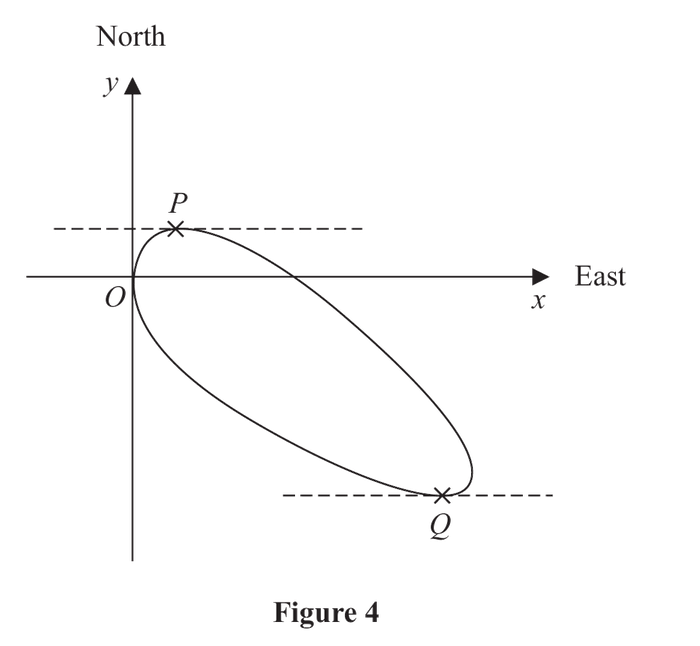
Figure 4 shows a sketch of the closed curve with equation
(x+y)3+10y2=108x
(a) Show that
dxdy=20y+3(x+y)2108−3(x+y)2
(5)
The curve is used to model the shape of a cycle track with both x and y measured in km.
The points P and Q represent points that are furthest north and furthest south of the origin O, as shown in Figure 4.
Using the result given in part (a),
(b) find how far the point Q is south of O. Give your answer to the nearest 100 m.
(4)
题目中文翻译
图 4 给出了封闭曲线的示意图,其方程为
(x+y)3+10y2=108x
(a) 证明
dxdy=20y+3(x+y)2108−3(x+y)2
。
该曲线用来模拟一条自行车赛道的形状,其中 x 和 y 的单位都是 km。
如图 4 所示,点 P 和点 Q 分别表示相对于原点 O 最北和最南的位置。
利用 (a) 中给出的结果,
(b) 求点 Q 在 O 的正南方多远。答案精确到最近的 100 m。
解答
(a)
解法一
思路
展开
对曲线方程关于 x 隐式求导。(x+y)3 要同时使用链式法则,并注意 dxd(x+y)=1+dxdy。展开后收集所有含 dxdy 的项,即可自然整理出目标式。
答题过程
展开
Differentiating
(x+y)3+10y2=108x
implicitly with respect to x gives
3(x+y)2(1+dxdy)+20ydxdy=108.
Therefore,
[20y+3(x+y)2]dxdy=3(x+y)2+3(x+y)2dxdy+20ydxdy=108,108−3(x+y)2.
Hence
dxdy=20y+3(x+y)2108−3(x+y)2.
(b)
解法一
思路
展开
最北点和最南点的切线水平,所以令 dxdy=0,即令 (a) 中分子为零,得到 x+y=±6。需要分别检查两个符号是否能在原曲线上产生实点;然后选取负的 y 坐标,并把距离换算成题目要求的精度。
答题过程
展开
At the northernmost and southernmost points, the tangent is horizontal. Hence
dxdy=0,
so
108−3(x+y)2=(x+y)2=0,36.
Thus
x+y=±6.
If x+y=−6, then x=−6−y. Substitution into the curve gives
5y2+54y+216=0.
Its discriminant is
542−4(5)(216)=−1404<0,
so this case has no real points.
Therefore, x+y=6, so x=6−y. Substituting into the curve,
63+10y2=5y2+54y−216=108(6−y),0.
Solving,
y==10−54±542+4(5)(216)5−27±3201.
The southernmost point has the negative value
y=5−27−3201=−13.906… km.
Therefore, Q is, to the nearest 100 m,
13.9 km=13900 m
south of O.