Skip to content
CalcGospel 國際數學圖譜
返回

P4 2023 Oct Q8

A Level / Edexcel / P4

IAL 2023 Oct Paper · Question 8

题目

Problem

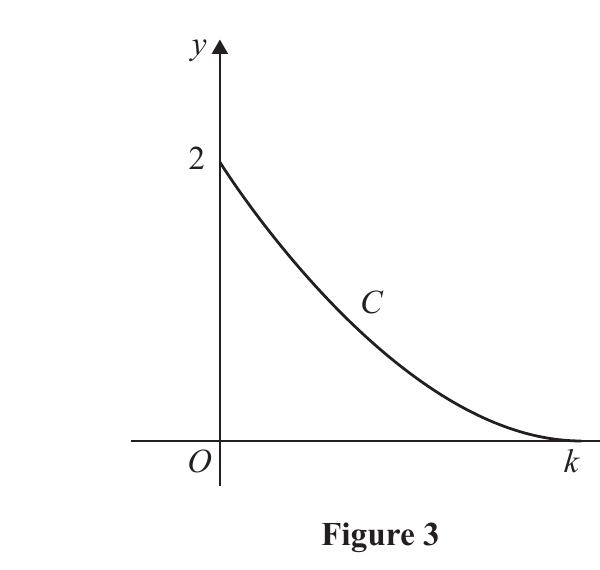
Figure 3 shows a sketch of the curve CC with parametric equations

x= 6t−3sin⁡2t,y= 2cos⁡t, 0≤t≤π2.\begin{align*} x=&\,6t-3\sin2t,\\ y=&\,2\cos t,\\ &\,0\le t\le\frac{\pi}{2}. \end{align*}

The curve meets the yy-axis at 22 and the xx-axis at kk, where kk is a constant.

(a) State the value of kk.

(1)

(b) Use parametric differentiation to show that

dydx=λcosec⁡t\frac{\mathrm{d}y}{\mathrm{d}x}=\lambda\cosec t

where λ\lambda is a constant to be found.

(4)

The point PP with parameter t=π4t=\dfrac{\pi}{4} lies on CC.

The tangent to CC at the point PP cuts the yy-axis at the point NN.

(c) Find the exact yy coordinate of NN, giving your answer in simplest form.

(3)

The region bounded by the curve, the xx-axis and the yy-axis is rotated through 2π2\pi radians about the xx-axis to form a solid of revolution.

(d) (i) Show that the volume of this solid is given by

∫0αβ(1−cos⁡4t) dt\int_0^{\alpha}\beta(1-\cos 4t)\,\mathrm{d}t

where α\alpha and β\beta are constants to be found.

(ii) Hence, using algebraic integration, find the exact volume of this solid.

(6)
题目中文翻译

图 3 给出了曲线 CC 的示意图,其参数方程为

x= 6t−3sin⁡2t,y= 2cos⁡t, 0≤t≤π2.\begin{align*} x=&\,6t-3\sin2t,\\ y=&\,2\cos t,\\ &\,0\le t\le\frac{\pi}{2}. \end{align*}

该曲线与 yy 轴交于 22,与 xx 轴交于 kk,其中 kk 为常数。

(a) 写出 kk 的值。

(1)

(b) 用参数求导法证明

dydx=λcosec⁡t\frac{\mathrm{d}y}{\mathrm{d}x}=\lambda\cosec t

其中 λ\lambda 为待求常数。

(4)

参数为 t=π4t=\dfrac{\pi}{4} 的点 PP 在曲线 CC 上。

曲线 CC 在点 PP 处的切线与 yy 轴交于点 NN。

(c) 求 NN 点的 yy 坐标精确值,并将答案化为最简形式。

(3)

由曲线、xx 轴和 yy 轴围成的区域绕 xx 轴旋转 2π2\pi 弧度,形成一个旋转体。

(d) (i) 证明该旋转体的体积可表示为

∫0αβ(1−cos⁡4t) dt\int_0^{\alpha}\beta(1-\cos 4t)\,\mathrm{d}t

其中 α,β\alpha,\beta 为待求常数。

(ii) 进而用代数积分法求该旋转体的精确体积。

(6)

解答

(a)

解法一

思路

展开

与 xx 轴相交时 y=0y=0,在给定范围内得到 t=π2t=\frac{\pi}{2},代入 xx 的参数方程。

答题过程

展开

At the xx-axis, y=0y=0, so 2cos⁡t=02\cos t=0.

For 0≤t≤π20\le t\le\frac{\pi}{2}, this gives t=π2t=\frac{\pi}{2}. Hence

x= 6⋅π2−3sin⁡π= 3π.\begin{align*} x=&\,6\cdot\frac{\pi}{2}-3\sin\pi\\ =&\,3\pi. \end{align*}

Therefore k=3π\boxed{k=3\pi}.

(b)

解法一

思路

展开

分别求参数导数,再用 dydx=dydt÷dxdt\frac{\mathrm{d}y}{\mathrm{d}x}=\frac{\mathrm{d}y}{\mathrm{d}t}\div\frac{\mathrm{d}x}{\mathrm{d}t}。用 cos⁡2t=1−2sin⁡2t\cos2t=1-2\sin^2t 化简分母。

答题过程

展开

Differentiating the parametric equations,

dxdt=6−6cos⁡2t,\frac{\mathrm{d}x}{\mathrm{d}t}=6-6\cos2t,

and

dydt=−2sin⁡t.\frac{\mathrm{d}y}{\mathrm{d}t}=-2\sin t.

Therefore

dydx=−2sin⁡t6−6cos⁡2t.\frac{\mathrm{d}y}{\mathrm{d}x} =\frac{-2\sin t}{6-6\cos2t}.

Using cos⁡2t=1−2sin⁡2t\cos2t=1-2\sin^2t,

6−6cos⁡2t= 6−6(1−2sin⁡2t)= 12sin⁡2t.\begin{align*} 6-6\cos2t =&\,6-6(1-2\sin^2t)\\ =&\,12\sin^2t. \end{align*}

Hence

dydx= −2sin⁡t12sin⁡2t= −16sin⁡t= −16cosec⁡t.\begin{align*} \frac{\mathrm{d}y}{\mathrm{d}x} =&\,\frac{-2\sin t}{12\sin^2t}\\ =&\,-\frac{1}{6\sin t}\\ =&\,-\frac16\cosec t. \end{align*}

Thus λ=−16\boxed{\lambda=-\frac16}.

也可以直接比较系数:将最初的导数式与 λcosec⁡t\lambda\cosec t 比较,两边乘以 sin⁡t\sin t,则

λ= −2sin⁡2t6−6cos⁡2t= −2sin⁡2t12sin⁡2t= −16.\begin{align*} \lambda =&\,\frac{-2\sin^2t}{6-6\cos2t}\\ =&\,\frac{-2\sin^2t}{12\sin^2t}\\ =&\,-\frac16. \end{align*}

This gives the same required derivative.

(c)

解法一

思路

展开

先求点 PP 的坐标及切线斜率。将它们代入 y=mx+cy=mx+c 求截距;也可以使用点斜式,令 x=0x=0 后得到同一结果。

答题过程

展开

At t=π4t=\frac{\pi}{4},

xP= 6⋅π4−3sin⁡π2= 3π2−3,\begin{align*} x_P=&\,6\cdot\frac{\pi}{4}-3\sin\frac{\pi}{2}\\ =&\,\frac{3\pi}{2}-3, \end{align*}

and

yP=2cos⁡π4=2.y_P=2\cos\frac{\pi}{4}=\sqrt2.

Using part (b), the gradient is

m= −16cosec⁡π4= −26.\begin{align*} m=&\,-\frac16\cosec\frac{\pi}{4}\\ =&\,-\frac{\sqrt2}{6}. \end{align*}

Let the tangent be y=mx+cy=mx+c. At PP, c=yP−mxPc=y_P-mx_P, so

c= 2+26⋅3π2 −26⋅3= 2+π24−22= π24+22.\begin{align*} c=&\,\sqrt2+\frac{\sqrt2}{6}\cdot\frac{3\pi}{2}\\ &\,\hspace{2pt}-\frac{\sqrt2}{6}\cdot3\\ =&\,\sqrt2+\frac{\pi\sqrt2}{4}-\frac{\sqrt2}{2}\\ =&\,\frac{\pi\sqrt2}{4}+\frac{\sqrt2}{2}. \end{align*}

At the yy-axis, x=0x=0 and y=cy=c. Therefore the exact yy coordinate of NN is

π24+22.\boxed{\frac{\pi\sqrt2}{4}+\frac{\sqrt2}{2}}.

点斜式的短变式:

y−yP=m(x−xP).y-y_P=m(x-x_P).

At NN, x=0x=0, so yN−yP=−mxPy_N-y_P=-mx_P. Hence yN=yP−mxPy_N=y_P-mx_P, giving the same calculation and result.

(d)

解法一

思路

展开

(i) 用 V=π∫y2 dxV=\pi\int y^2\,\mathrm{d}x,将 dx\mathrm{d}x 换成 dxdt dt\frac{\mathrm{d}x}{\mathrm{d}t}\,\mathrm{d}t。参数从 00 到 π2\frac{\pi}{2};用倍角公式化成含 cos⁡4t\cos4t 的被积函数,注意 π\pi 必须包含在 β\beta 中。(ii) 承接所得积分,用代数积分求精确体积。

答题过程

展开

(i)

The region runs from t=0t=0 at the yy-axis to t=π2t=\frac{\pi}{2} at the xx-axis. Thus

V=π∫0π/2y2dxdt dt.V=\pi\int_0^{\pi/2} y^2\frac{\mathrm{d}x}{\mathrm{d}t}\,\mathrm{d}t.

Write H=y2dxdtH=y^2\frac{\mathrm{d}x}{\mathrm{d}t}. Then

H= 4cos⁡2t(6−6cos⁡2t)= 4cos⁡2t(12sin⁡2t)= 48sin⁡2tcos⁡2t= 12sin⁡2(2t)= 6(1−cos⁡4t).\begin{align*} H=&\,4\cos^2t(6-6\cos2t)\\ =&\,4\cos^2t(12\sin^2t)\\ =&\,48\sin^2t\cos^2t\\ =&\,12\sin^2(2t)\\ =&\,6(1-\cos4t). \end{align*}

Here we used sin⁡2t=2sin⁡tcos⁡t\sin2t=2\sin t\cos t and sin⁡2(2t)=1−cos⁡4t2\sin^2(2t)=\frac{1-\cos4t}{2}.

Therefore

V=∫0π/26π(1−cos⁡4t) dt.V=\int_0^{\pi/2}6\pi(1-\cos4t)\,\mathrm{d}t.

Hence

α=π2,β=6π.\boxed{\alpha=\frac{\pi}{2}}, \qquad \boxed{\beta=6\pi}.

被积函数还可以用以下两种三角恒等式化简。

用 4cos⁡2t=2+2cos⁡2t4\cos^2t=2+2\cos2t:

H= (2+2cos⁡2t)(6−6cos⁡2t)= 12(1−cos⁡2(2t))= 12(1−1+cos⁡4t2)= 6(1−cos⁡4t).\begin{align*} H=&\,(2+2\cos2t)(6-6\cos2t)\\ =&\,12\big(1-\cos^2(2t)\big)\\ =&\,12\bigg(1-\frac{1+\cos4t}{2}\bigg)\\ =&\,6(1-\cos4t). \end{align*}

或者用 sin⁡2t=1−cos⁡2t\sin^2t=1-\cos^2t:

H=48cos⁡2t−48cos⁡4t.H=48\cos^2t-48\cos^4t.

Since

cos⁡4t= 2cos⁡2(2t)−1= 2(2cos⁡2t−1)2−1= 8cos⁡4t−8cos⁡2t+1,\begin{align*} \cos4t =&\,2\cos^2(2t)-1\\ =&\,2(2\cos^2t-1)^2-1\\ =&\,8\cos^4t-8\cos^2t+1, \end{align*}

we again obtain H=6(1−cos⁡4t)H=6(1-\cos4t).

(ii)

Using the integral found in (i), an antiderivative is

F(t)=6πt−3π2sin⁡4t.F(t)=6\pi t-\frac{3\pi}{2}\sin4t.

The endpoint values are

F(π2)= 3π2−3π2sin⁡2π= 3π2,\begin{align*} F\bigg(\frac{\pi}{2}\bigg) =&\,3\pi^2-\frac{3\pi}{2}\sin2\pi\\ =&\,3\pi^2, \end{align*}

and F(0)=0F(0)=0. Hence

V= F(π2)−F(0)= 3π2.\begin{align*} V=&\,F\bigg(\frac{\pi}{2}\bigg)-F(0)\\ =&\,3\pi^2. \end{align*}

The exact volume is 3π2\boxed{3\pi^2}.