Skip to content
CalcGospel 國際數學圖譜
返回

P4 2024 Oct Q10

A Level / Edexcel / P4

IAL 2024 Oct Paper · Question 10

题目

Problem

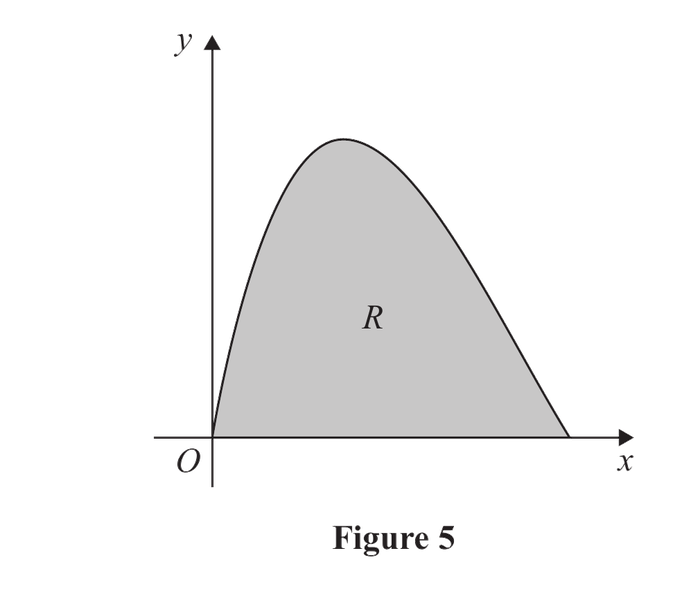
Figure 5 shows a sketch of the curve with parametric equations

x= 3t2y= sin⁡tsin⁡2t 0≤t≤π2\begin{align*} x=&\,3t^2\\ y=&\,\sin t\sin 2t\\ &\,0\le t\le\frac{\pi}{2} \end{align*}

The region RR, shown shaded in Figure 5, is bounded by the curve and the xx-axis.

(a) Show that the area of RR is

k∫0π2tsin⁡2tcos⁡t dtk\int_0^{\frac{\pi}{2}} t\sin^2 t\cos t\,\mathrm{d}t

where kk is a constant to be found.

(3)

(b) Hence, using algebraic integration, find the exact area of RR, giving your answer in the form

pπ+qp\pi+q

where pp and qq are constants.

(5)
题目中文翻译

图 5 给出了曲线的草图,其参数方程为

x= 3t2y= sin⁡tsin⁡2t 0≤t≤π2\begin{align*} x=&\,3t^2\\ y=&\,\sin t\sin 2t\\ &\,0\le t\le\frac{\pi}{2} \end{align*}

阴影区域 RR 由该曲线与 xx 轴围成。

(a) 证明区域 RR 的面积为

k∫0π2tsin⁡2tcos⁡t dtk\int_0^{\frac{\pi}{2}} t\sin^2 t\cos t\,\mathrm{d}t

其中 kk 是待求常数。

(3)

(b) 进而使用代数积分,求区域 RR 的精确面积,并将答案写成

pπ+qp\pi+q

的形式,其中 p,qp,q 为常数。

(5)

解答

(a)

解法一

思路

展开

参数曲线面积用 ∫y dx\int y\,\mathrm{d}x。先求 dx/dt\mathrm{d}x/\mathrm{d}t,再用二倍角公式化简 yy,得到所需系数。

答题过程

展开

For the parametric curve,

dxdt=6t.\frac{\mathrm{d}x}{\mathrm{d}t}=6t.

Also, sin⁡2t=2sin⁡tcos⁡t\sin2t=2\sin t\cos t, so

y=2sin⁡2tcos⁡t.y=2\sin^2t\cos t.

As tt runs from 00 to π/2\pi/2, x=3t2x=3t^2 increases and y≥0y\ge0. Hence the area is

A=∫0π/2y dxdt dt.\mathcal A=\int_0^{\pi/2}y\,\frac{\mathrm{d}x}{\mathrm{d}t}\,\mathrm{d}t.

The integrand simplifies to

y dxdt=12tsin⁡2tcos⁡t.y\,\frac{\mathrm{d}x}{\mathrm{d}t}=12t\sin^2t\cos t.

Therefore

A=12∫0π/2tsin⁡2tcos⁡t dt,\mathcal A=12\int_0^{\pi/2}t\sin^2t\cos t\,\mathrm{d}t,

so

k=12.\boxed{k=12}.

(b)

解法一

思路

展开

承接 (a) 的面积积分,用分部积分消去因子 tt。将剩下的 sin⁡3t\sin^3t 写成 sin⁡t(1−cos⁡2t)\sin t(1-\cos^2t),求原函数并代入端点。

答题过程

展开

By part (a), A=12I\mathcal A=12I, where

I=∫0π/2tsin⁡2tcos⁡t dt.I=\int_0^{\pi/2}t\sin^2t\cos t\,\mathrm{d}t.

Use integration by parts with u=tu=t and dv=sin⁡2tcos⁡t dt\mathrm{d}v=\sin^2t\cos t\,\mathrm{d}t. Then du=dt\mathrm{d}u=\mathrm{d}t and v=sin⁡3t/3v=\sin^3t/3.

Let

J=∫0π/2sin⁡3t dt.J=\int_0^{\pi/2}\sin^3t\,\mathrm{d}t.

Integration by parts gives

I=[tsin⁡3t3]0π/2−J3.I=\bigg[\frac{t\sin^3t}{3}\bigg]_0^{\pi/2}-\frac{J}{3}.

The boundary term is π/6\pi/6, so

A=2π−4J.\mathcal A=2\pi-4J.

Use sin⁡3t=sin⁡t(1−cos⁡2t)\sin^3t=\sin t(1-\cos^2t). An antiderivative is

−cos⁡t+cos⁡3t3.-\cos t+\frac{\cos^3t}{3}.

At t=π/2t=\pi/2 it equals 00; at t=0t=0 it equals −1+1/3=−2/3-1+1/3=-2/3. Therefore

J=0−(−23)=23.J=0-\bigg(-\frac23\bigg)=\frac23.

Hence the exact area is

A=2π−83.\boxed{\mathcal A=2\pi-\frac83}.

对剩余积分也可使用三倍角恒等式 sin⁡3t=3sin⁡t−4sin⁡3t\sin3t=3\sin t-4\sin^3t。由于

∫0π/2sin⁡t dt=1,\int_0^{\pi/2}\sin t\,\mathrm{d}t=1, ∫0π/2sin⁡3t dt=13,\int_0^{\pi/2}\sin3t\,\mathrm{d}t=\frac13,

得到 4J=3−1/3=8/34J=3-1/3=8/3,与上述结果一致。这只是计算同一剩余积分的另一种三角恒等式。

解法二

思路

展开

先令 u=sin⁡tu=\sin t,把积分化为含 arcsin⁡u\arcsin u 的形式,分部积分后再以 v=1−u2v=\sqrt{1-u^2} 换元。每次换元同步改变上下限。

答题过程

展开

By part (a),

A=12∫0π/2tsin⁡2tcos⁡t dt.\mathcal A=12\int_0^{\pi/2}t\sin^2t\cos t\,\mathrm{d}t.

Set u=sin⁡tu=\sin t, so du=cos⁡t dt\mathrm{d}u=\cos t\,\mathrm{d}t and t=arcsin⁡ut=\arcsin u on the given interval. The limits become u=0u=0 and u=1u=1, giving

A=12∫01u2arcsin⁡u du.\mathcal A=12\int_0^1u^2\arcsin u\,\mathrm{d}u.

Integrate by parts, differentiating arcsin⁡u\arcsin u and integrating u2u^2:

A= 4[u3arcsin⁡u]01 −4K,\begin{align*} \mathcal A=&\,4\big[u^3\arcsin u\big]_0^1\\ &\,\hspace{2pt}-4K, \end{align*}

where

K=∫01u31−u2 du.K=\int_0^1\frac{u^3}{\sqrt{1-u^2}}\,\mathrm{d}u.

The boundary term is 4(π/2)=2π4(\pi/2)=2\pi.

For KK, use v=1−u2v=\sqrt{1-u^2}. Then u2=1−v2u^2=1-v^2 and

u du=−v dv.u\,\mathrm{d}u=-v\,\mathrm{d}v.

The limits change from u=0,1u=0,1 to v=1,0v=1,0. Thus

K= ∫10−(1−v2) dv= ∫01(1−v2) dv= [v−v33]01= 23.\begin{align*} K=&\,\int_1^0-(1-v^2)\,\mathrm{d}v\\ =&\,\int_0^1(1-v^2)\,\mathrm{d}v\\ =&\,\bigg[v-\frac{v^3}{3}\bigg]_0^1\\ =&\,\frac23. \end{align*}

Therefore

A=2π−4K=2π−83.\boxed{\mathcal A=2\pi-4K=2\pi-\frac83}.

解法三

思路

展开

第一次分部积分后,对剩余的 sin⁡3t\sin^3t 再分部积分。边界项为零,剩下的 sin⁡tcos⁡2t\sin t\cos^2t 可直接积分。

答题过程

展开

Use the area integral from part (a). For its first integration by parts, take u=tu=t and v=sin⁡3t/3v=\sin^3t/3. This gives

A=4[tsin⁡3t]0π/2−4J,\mathcal A=4\big[t\sin^3t\big]_0^{\pi/2}-4J,

where

J=∫0π/2sin⁡3t dt.J=\int_0^{\pi/2}\sin^3t\,\mathrm{d}t.

The boundary term equals 2π2\pi, so A=2π−4J\mathcal A=2\pi-4J.

Now integrate J=∫0π/2sin⁡2tsin⁡t dtJ=\int_0^{\pi/2}\sin^2t\sin t\,\mathrm{d}t by parts again. Take u=sin⁡2tu=\sin^2t and dv=sin⁡t dt\mathrm{d}v=\sin t\,\mathrm{d}t. Then

du=2sin⁡tcos⁡t dt,v=−cos⁡t.\mathrm{d}u=2\sin t\cos t\,\mathrm{d}t, \qquad v=-\cos t.

Hence

J= [−sin⁡2tcos⁡t]0π/2 +2L,\begin{align*} J=&\,\big[-\sin^2t\cos t\big]_0^{\pi/2}\\ &\,\hspace{2pt}+2L, \end{align*}

where

L=∫0π/2sin⁡tcos⁡2t dt.L=\int_0^{\pi/2}\sin t\cos^2t\,\mathrm{d}t.

The boundary term for JJ is zero at both endpoints. Also,

L= [−cos⁡3t3]0π/2= 13.\begin{align*} L=&\,\bigg[-\frac{\cos^3t}{3}\bigg]_0^{\pi/2}\\ =&\,\frac13. \end{align*}

Thus J=2L=2/3J=2L=2/3. The exact area is therefore

A=2π−83.\boxed{\mathcal A=2\pi-\frac83}.