题目
Problem
In this question you must show all stages of your working.
Solutions relying entirely on calculator technology are not acceptable.
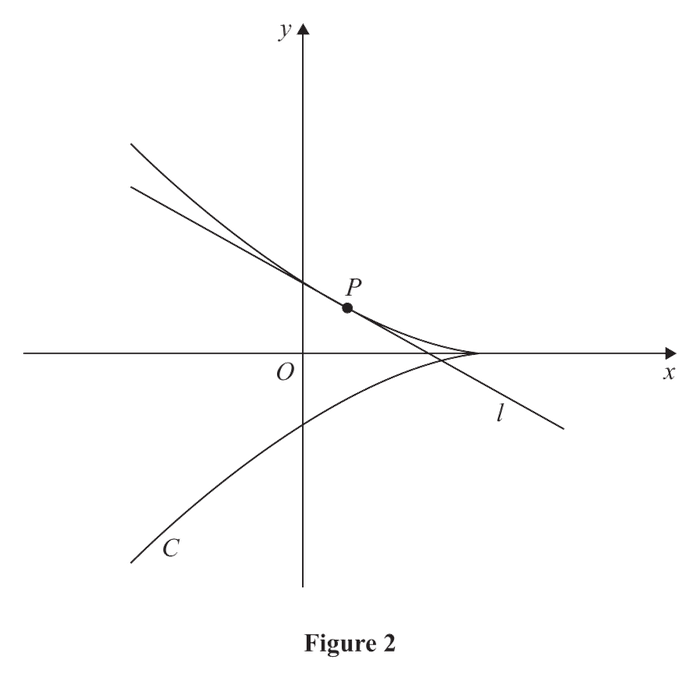
Figure 2 shows a sketch of the curve C C C
x = 2 cos 2 t , y = sin 3 t , − π 2 < t < π 2 . \begin{align*}
x=&\,2\cos2t,\qquad y=\sin^3t,\\
&\,-\frac{\pi}{2}<t<\frac{\pi}{2}.
\end{align*} x = 2 cos 2 t , y = sin 3 t , − 2 π < t < 2 π . where t t t
The point P P P C C C t = π 6 t=\dfrac{\pi}{6} t = 6 π
The line l l l C C C P P P
(a) Use parametric differentiation to show that
(i) d y d x = k sin t \dfrac{\mathrm{d}y}{\mathrm{d}x}=k\sin t d x d y = k sin t k k k
(ii) an equation for l l l 3 x + 16 y − 5 = 0 3x+16y-5=0 3 x + 16 y − 5 = 0
(6)
The line l l l C C C Q Q Q
(b) Using algebra and showing detailed reasoning, find the exact coordinates of Q Q Q
(6)
题目中文翻译
本题必须写出全部解题步骤。
不接受完全依赖计算器技术的解法。
图 2 给出了曲线 C C C
x = 2 cos 2 t , y = sin 3 t , − π 2 < t < π 2 . \begin{align*}
x=&\,2\cos2t,\qquad y=\sin^3t,\\
&\,-\frac{\pi}{2}<t<\frac{\pi}{2}.
\end{align*} x = 2 cos 2 t , y = sin 3 t , − 2 π < t < 2 π . 其中 t t t
点 P P P C C C t = π 6 t=\dfrac{\pi}{6} t = 6 π
图 2 中的直线 l l l C C C P P P
(a) 用参数求导证明:
(i) d y d x = k sin t \dfrac{\mathrm{d}y}{\mathrm{d}x}=k\sin t d x d y = k sin t k k k
(ii) 直线 l l l 3 x + 16 y − 5 = 0 3x+16y-5=0 3 x + 16 y − 5 = 0
(6)
直线 l l l C C C Q Q Q
(b) 用代数方法并写出详细推理,求点 Q Q Q
(6)
解答
(a)(i)
解法一
思路
展开
分别对参数求导,取两导数的比,再用二倍角公式化简。
答题过程
展开
Differentiate with respect to t t t
d x d t = − 4 sin 2 t , d y d t = 3 sin 2 t cos t . \begin{align*}
\frac{\mathrm{d}x}{\mathrm{d}t}=&\,-4\sin2t,\\
\frac{\mathrm{d}y}{\mathrm{d}t}=&\,3\sin^2t\cos t.
\end{align*} d t d x = d t d y = − 4 sin 2 t , 3 sin 2 t cos t . Using d y / d x = ( d y / d t ) ÷ ( d x / d t ) \mathrm{d}y/\mathrm{d}x=(\mathrm{d}y/\mathrm{d}t)\div(\mathrm{d}x/\mathrm{d}t) d y / d x = ( d y / d t ) ÷ ( d x / d t )
d y d x = 3 sin 2 t cos t − 4 sin 2 t . \frac{\mathrm{d}y}{\mathrm{d}x}
=\frac{3\sin^2t\cos t}{-4\sin2t}. d x d y = − 4 sin 2 t 3 sin 2 t cos t . Since sin 2 t = 2 sin t cos t \sin2t=2\sin t\cos t sin 2 t = 2 sin t cos t
d y d x = 3 sin 2 t cos t − 8 sin t cos t = − 3 8 sin t . \begin{align*}
\frac{\mathrm{d}y}{\mathrm{d}x}
=&\,\frac{3\sin^2t\cos t}{-8\sin t\cos t}\\
=&\,-\frac38\sin t.
\end{align*} d x d y = = − 8 sin t cos t 3 sin 2 t cos t − 8 3 sin t . Thus k = − 3 / 8 k=-3/8 k = − 3/8
(a)(ii)
解法一
思路
展开
代入 t = π / 6 t=\pi/6 t = π /6
答题过程
展开
At P P P t = π / 6 t=\pi/6 t = π /6
x = 2 cos ( π / 3 ) = 1 , y = ( sin ( π / 6 ) ) 3 = 1 8 . \begin{align*}
x=&\,2\cos(\pi/3)=1,\\
y=&\,\big(\sin(\pi/6)\big)^3=\frac18.
\end{align*} x = y = 2 cos ( π /3 ) = 1 , ( sin ( π /6 ) ) 3 = 8 1 . The tangent gradient is
m = − 3 8 sin ( π / 6 ) = − 3 16 . m=-\frac38\sin(\pi/6)=-\frac3{16}. m = − 8 3 sin ( π /6 ) = − 16 3 . Using the point-gradient form,
y − 1 8 = − 3 16 ( x − 1 ) , 16 y − 2 = − 3 x + 3 , 3 x + 16 y − 5 = 0 , \begin{align*}
y-\frac18=&\,-\frac3{16}(x-1),\\
16y-2=&\,-3x+3,\\
3x+16y-5=&\,0,
\end{align*} y − 8 1 = 16 y − 2 = 3 x + 16 y − 5 = − 16 3 ( x − 1 ) , − 3 x + 3 , 0 , as required.
(b)
解法一
思路
展开
将参数方程代入切线,以 u = sin t u=\sin t u = sin t P P P
答题过程
展开
Substitute the parametric equations into the line:
6 cos 2 t + 16 sin 3 t − 5 = 0. 6\cos2t+16\sin^3t-5=0. 6 cos 2 t + 16 sin 3 t − 5 = 0. Using cos 2 t = 1 − 2 sin 2 t \cos2t=1-2\sin^2t cos 2 t = 1 − 2 sin 2 t u = sin t u=\sin t u = sin t
6 ( 1 − 2 u 2 ) + 16 u 3 − 5 = 0 , 16 u 3 − 12 u 2 + 1 = 0. \begin{align*}
6(1-2u^2)+16u^3-5=&\,0,\\
16u^3-12u^2+1=&\,0.
\end{align*} 6 ( 1 − 2 u 2 ) + 16 u 3 − 5 = 16 u 3 − 12 u 2 + 1 = 0 , 0. At P P P u = 1 / 2 u=1/2 u = 1/2 2 u − 1 2u-1 2 u − 1
16 u 3 − 12 u 2 + 1 = ( 2 u − 1 ) ( 8 u 2 − 2 u − 1 ) . 16u^3-12u^2+1=(2u-1)(8u^2-2u-1). 16 u 3 − 12 u 2 + 1 = ( 2 u − 1 ) ( 8 u 2 − 2 u − 1 ) . Factor the quadratic:
8 u 2 − 2 u − 1 = 8 u 2 − 4 u + 2 u − 1 = 4 u ( 2 u − 1 ) + ( 2 u − 1 ) = ( 2 u − 1 ) ( 4 u + 1 ) . \begin{align*}
8u^2-2u-1=&\,8u^2-4u+2u-1\\
=&\,4u(2u-1)+(2u-1)\\
=&\,(2u-1)(4u+1).
\end{align*} 8 u 2 − 2 u − 1 = = = 8 u 2 − 4 u + 2 u − 1 4 u ( 2 u − 1 ) + ( 2 u − 1 ) ( 2 u − 1 ) ( 4 u + 1 ) . Thus
( 2 u − 1 ) 2 ( 4 u + 1 ) = 0. (2u-1)^2(4u+1)=0. ( 2 u − 1 ) 2 ( 4 u + 1 ) = 0. The root u = 1 / 2 u=1/2 u = 1/2 P P P Q Q Q sin t = − 1 / 4 \sin t=-1/4 sin t = − 1/4
The parameter t = arcsin ( − 1 / 4 ) t=\arcsin(-1/4) t = arcsin ( − 1/4 )
y = ( − 1 / 4 ) 3 = − 1 64 , cos 2 t = 1 − 2 ( 1 / 16 ) = 7 8 , x = 2 ⋅ 7 8 = 7 4 . \begin{align*}
y=&\,(-1/4)^3=-\frac1{64},\\
\cos2t=&\,1-2(1/16)=\frac78,\\
x=&\,2\cdot\frac78=\frac74.
\end{align*} y = cos 2 t = x = ( − 1/4 ) 3 = − 64 1 , 1 − 2 ( 1/16 ) = 8 7 , 2 ⋅ 8 7 = 4 7 . Therefore
Q = ( 7 4 , − 1 64 ) . \boxed{Q=\bigg(\frac74,-\frac1{64}\bigg)}. Q = ( 4 7 , − 64 1 ) .
解法二
思路
展开
由 x x x sin 2 t \sin^2t sin 2 t y 2 = sin 6 t y^2=\sin^6t y 2 = sin 6 t x x x
答题过程
展开
Eliminate t t t x x x
x = 2 ( 1 − 2 sin 2 t ) , sin 2 t = 2 − x 4 . \begin{align*}
x=&\,2(1-2\sin^2t),\\
\sin^2t=&\,\frac{2-x}{4}.
\end{align*} x = sin 2 t = 2 ( 1 − 2 sin 2 t ) , 4 2 − x . Since y = sin 3 t y=\sin^3t y = sin 3 t
y 2 = ( sin 2 t ) 3 = ( 2 − x 4 ) 3 , 64 y 2 = ( 2 − x ) 3 . \begin{align*}
y^2=&\,(\sin^2t)^3=\bigg(\frac{2-x}{4}\bigg)^3,\\
64y^2=&\,(2-x)^3.
\end{align*} y 2 = 64 y 2 = ( sin 2 t ) 3 = ( 4 2 − x ) 3 , ( 2 − x ) 3 . 平方关系保留上下两个分支,不将 y y y 3 / 2 3/2 3/2
On the line, 16 y = 5 − 3 x 16y=5-3x 16 y = 5 − 3 x
( 5 − 3 x ) 2 = 4 ( 2 − x ) 3 , 25 − 30 x + 9 x 2 = 32 − 48 x + 24 x 2 − 4 x 3 , 4 x 3 − 15 x 2 + 18 x − 7 = 0. \begin{align*}
(5-3x)^2=&\,4(2-x)^3,\\
25-30x+9x^2
=&\,32-48x+24x^2-4x^3,\\
4x^3-15x^2+18x-7=&\,0.
\end{align*} ( 5 − 3 x ) 2 = 25 − 30 x + 9 x 2 = 4 x 3 − 15 x 2 + 18 x − 7 = 4 ( 2 − x ) 3 , 32 − 48 x + 24 x 2 − 4 x 3 , 0. The known intersection P P P x = 1 x=1 x = 1 x − 1 x-1 x − 1
4 x 3 − 15 x 2 + 18 x − 7 = ( x − 1 ) ( 4 x 2 − 11 x + 7 ) , 4 x 2 − 11 x + 7 = ( x − 1 ) ( 4 x − 7 ) . \begin{align*}
4x^3-15x^2+18x-7
=&\,(x-1)(4x^2-11x+7),\\
4x^2-11x+7=&\,(x-1)(4x-7).
\end{align*} 4 x 3 − 15 x 2 + 18 x − 7 = 4 x 2 − 11 x + 7 = ( x − 1 ) ( 4 x 2 − 11 x + 7 ) , ( x − 1 ) ( 4 x − 7 ) . Therefore ( x − 1 ) 2 ( 4 x − 7 ) = 0 (x-1)^2(4x-7)=0 ( x − 1 ) 2 ( 4 x − 7 ) = 0 P P P x = 7 / 4 x=7/4 x = 7/4
16 y = 5 − 21 4 = − 1 4 , y = − 1 64 . \begin{align*}
16y=&\,5-\frac{21}{4}=-\frac14,\\
y=&\,-\frac1{64}.
\end{align*} 16 y = y = 5 − 4 21 = − 4 1 , − 64 1 . To check the candidate after squaring, take t = arcsin ( − 1 / 4 ) t=\arcsin(-1/4) t = arcsin ( − 1/4 ) ( − π / 2 , π / 2 ) (-\pi/2,\pi/2) ( − π /2 , π /2 ) y = sin 3 t = − 1 / 64 y=\sin^3t=-1/64 y = sin 3 t = − 1/64 x = 2 ( 1 − 2 sin 2 t ) = 7 / 4 x=2(1-2\sin^2t)=7/4 x = 2 ( 1 − 2 sin 2 t ) = 7/4
Thus Q = ( 7 / 4 , − 1 / 64 ) Q=(7/4,-1/64) Q = ( 7/4 , − 1/64 )
解法三
思路
展开
用 y y y sin t \sin t sin t y y y P P P
答题过程
展开
Let s = y 3 s=\sqrt[3]{y} s = 3 y y = sin 3 t y=\sin^3t y = sin 3 t s = sin t s=\sin t s = sin t
x = 2 − 4 s 2 . x=2-4s^2. x = 2 − 4 s 2 . Substitute into the line:
3 ( 2 − 4 s 2 ) + 16 y − 5 = 0 , 12 s 2 = 16 y + 1. \begin{align*}
3(2-4s^2)+16y-5=&\,0,\\
12s^2=&\,16y+1.
\end{align*} 3 ( 2 − 4 s 2 ) + 16 y − 5 = 12 s 2 = 0 , 16 y + 1. Cube both sides and use s 6 = y 2 s^6=y^2 s 6 = y 2
1728 y 2 = ( 16 y + 1 ) 3 , 1728 y 2 = 4096 y 3 + 768 y 2 + 48 y + 1 , 4096 y 3 − 960 y 2 + 48 y + 1 = 0. \begin{align*}
1728y^2=&\,(16y+1)^3,\\
1728y^2=&\,4096y^3+768y^2\\
&\,+48y+1,\\
4096y^3-960y^2+48y+1=&\,0.
\end{align*} 1728 y 2 = 1728 y 2 = 4096 y 3 − 960 y 2 + 48 y + 1 = ( 16 y + 1 ) 3 , 4096 y 3 + 768 y 2 + 48 y + 1 , 0. At P P P y = 1 / 8 y=1/8 y = 1/8 8 y − 1 8y-1 8 y − 1
4096 y 3 − 960 y 2 + 48 y + 1 = ( 8 y − 1 ) ( 512 y 2 − 56 y − 1 ) . \begin{align*}
&\,4096y^3-960y^2+48y+1\\
=&\,(8y-1)(512y^2-56y-1).
\end{align*} = 4096 y 3 − 960 y 2 + 48 y + 1 ( 8 y − 1 ) ( 512 y 2 − 56 y − 1 ) . The quadratic factors as ( 8 y − 1 ) ( 64 y + 1 ) (8y-1)(64y+1) ( 8 y − 1 ) ( 64 y + 1 )
( 8 y − 1 ) 2 ( 64 y + 1 ) = 0. (8y-1)^2(64y+1)=0. ( 8 y − 1 ) 2 ( 64 y + 1 ) = 0. Excluding P P P y = − 1 / 64 y=-1/64 y = − 1/64
3 x = 5 − 16 ( − 1 / 64 ) = 21 4 , x = 7 4 . \begin{align*}
3x=&\,5-16(-1/64)=\frac{21}{4},\\
x=&\,\frac74.
\end{align*} 3 x = x = 5 − 16 ( − 1/64 ) = 4 21 , 4 7 . Check with the real cube root s = − 1 / 4 s=-1/4 s = − 1/4 12 s 2 = 3 / 4 = 16 y + 1 12s^2=3/4=16y+1 12 s 2 = 3/4 = 16 y + 1 t = arcsin ( − 1 / 4 ) t=\arcsin(-1/4) t = arcsin ( − 1/4 ) x = 2 − 4 s 2 = 7 / 4 x=2-4s^2=7/4 x = 2 − 4 s 2 = 7/4
Hence Q = ( 7 / 4 , − 1 / 64 ) Q=(7/4,-1/64) Q = ( 7/4 , − 1/64 )